
I was nine years old in 1952 when my parents and I traveled by overnight train from Philadelphia to Florida during my spring vacation to visit my uncle, who owned a trailer park in Sarasota. We were going to stay with him for about ten days in his Airstream trailer. Everything about this plan thrilled me. Sleeping overnight on a train! And also in a trailer! Shuffleboard! Trips to a beach! It was going to be an amazing adventure.
I spent hours looking out my roomette window. Trains, unlike cars or buses, don’t travel along the main streets of the towns. The view from the window doesn’t include shops or churches or pretty front porches. Train tracks tend to lie behind poorer neighborhoods and through industrial areas. As a passenger, you take in the unburnished and perhaps most authentic view of a community.
As the train rattled on past Baltimore through the city outskirts, everything looked rundown, like nothing I had ever seen. Small dwellings, packed together, no more than shacks; backyards which were simply patches of dusty ground, nothing green, not a tree in sight. There were small children playing in those yards, in the dirt. I watched these kids –what back then we would have called, to my everlasting shame, “pickaninnies”-playing no more than a hundred feet from the train tracks. From what I could see as the train flew past, they were playing with sticks, a ragged ball or two, an old worn cloth doll; nothing that matched my idea of toys. I sat bolt upright and kept looking at the children, a palpable sense of shock and then a puzzled realization as I understood that this was all they had: tumbledown shacks for homes, sticks and rags for toys. Their lives bore no resemblance to mine, none at all.
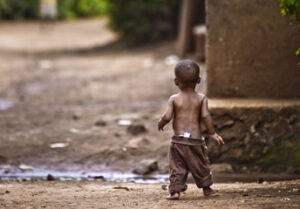
For I lived in a tightly circumscribed upper middle-class community. I was, as was everyone I knew, in the true sense of the word, a WASP. I had never crossed paths with people of color who inhabited other sections of our city. Everyone I knew was white, wealthy, and Episcopalian. Never had I heard anyone in my family, my friends or my parents’ friends discuss race, poverty, or inequality. My world was one where such disparities simply didn’t exist. Indeed, the concept was so prevalent that now, thinking back to my childhood, I believe that we children didn’t know there even were “others.” Which is why, I imagine, that it had never occurred to me there were children growing up in circumstances so completely different from my own.
Because of that systemic ignorance, I am convinced now, as I had sensed at the time but had no word for, that my view from the train window was a moment of awakening to the meaning of justice, or, more precisely, injustice. It was my first glimpse of life’s fickleness, the first glimmer of understanding that my birth into high society was entirely random, while those little children, living in poverty, no more deserved their situation than I had earned mine.
The seeds of a question were planted that day, and the question was “why?” Why was my life the way it was? Why did those children live the way they did? Why did God plant me in a privileged community with every opportunity at my fingertips and give those little children nothing? I wanted an answer and there was no one who could explain it to me. What I do know is, that on my train ride to Florida, the notion of equality and diversity had taken root in my brain, and I would never see the world the same way again.
Long before Walt Disney invaded the landscape in Orlando, Marineland in the city of St. Augustine, was the go-to tourist attraction, where there was a dolphin show. The keeper who was feeding the dolphins spotted me, a little girl in the crowd, and invited me to come help him. After donning a rain poncho, I stepped out onto the pier and held the fish over the water. The dolphins leaped up to take the fish out of my hands while the whole crowd cheered. I felt very important.
My parents had explained that St. Augustine was the oldest continuously occupied city in the United States. To see the historic district, we rode in a horse-drawn carriage. Watching our driver, a Black gentleman whom we barely acknowledged, I again thought about justice and equality. Why was it his role to drive us around? Why were we, the privileged ones, sitting in the shaded back of the carriage while he worked in the hot sun? Who determines what role people play in society? Who has a choice?
With these few moments: seeing small Black children play in the dirt, going for a comfortable carriage ride and taking part in what I later came to regard as an act of cruelty using animals for entertainment and commercial gain, my mind was starting to form the larger questions that would continue to haunt me as I grew into adulthood.
8 Responses
Wonderful Polly. Very haunting and raises similar memories and breakthrough childhood realizations. Also questions about “why” that no adults in my life could answer to my satisfaction.
Very relatable.
Having spent my late elementary school years in a recovering war-torn Europe (France was home)I had similar awakenings, but it was much broader than just color. I still remember crying seeing Lady Liberty as we entered home port and wondering whether I had seen the last of the very strained economics (and obviously much more) of a recovering peoples from war.
That is why peace has such meaning for me. Thanks for stirring those early memories.
In some ways, Polly, your expeerience reminds me of what i feel when watchinb PBS News (which I respect) showing the huge poverty in other parts of the world, the families who have had to leave home, live in tents, have very litle food, or the cities mostly made of cement, or bombed out. It is so sad that so many people have to live that way, that children starve, that families are separated, or lose oneanother. I look out at the green fields outside my kitchen window and wonder how we can make it that way for everyone. Nancy Shepherd
In some ways, Polly, your expeerience reminds me of what i feel when watchinb PBS News (which I respect) showing the huge poverty in other parts of the world, the families who have had to leave home, live in tents, have very litle food, or the cities mostly made of cement, or bombed out. It is so sad that so many people have to live that way, that children starve, that families are separated, or lose oneanother. I look out at the green fields outside my kitchen window and wonder how we can make it that way for everyone. Nancy Shepherd
This is so powerful, Polly. I came from a very different socio-economic status, but even we were aware that we were privileged compared with our neighbors of color. Our Jewish neighbors, too. I never understood it. My mother didn’t either.
I’m impressed that your seeds of awakening occurred at such a young age!
Mine came much, much later — perhaps it was because I grew up in a small town of lower-middle class people, without a lot of contrasts.
thanks Polly, so pertinent to me, too much to write. Today in Galveston Our police chief presents new homelessness outreach division to better connect homeless people with housing resources, addiction treatment, etc. Our churches have taken lead in providing food pantries, clothes closet for free clothes, medical care, counseling, arranging identification, family reunification and much more. Love your neighbor must prevail!